SVG Coding Examples: Useful Recipes For Writing Vectors By Hand — Smashing Magazine

Myriam Frisano explores the basics of hand-coding SVGs with practical examples to demystify the inner workings of common SVG elements. In this guide, you’ll learn about asking the right questions to solve common positioning problems and how to leverage JavaScript so that, by the end, you can add “SVG coding” to your toolbox. You’ll also be able to declare proudly, “I know how to draw literal pictures with words!”
Transparent Sticky Notes– The Paper Mouse

Jot down memos and organize your notes with these translucent sticky notes! Easy to remove or rearrange, they come in small, medium, and large sizes and can be used to take notes over text without writing on your page. They come in a sturdy, slim booklet that fits easily into a bag or even in some pencil cases. 6 sizes
An HTML element id is a global variable

Little relatively unknown fact, if you have an id attribute on an element, you can reference it in this way:
<button id="yo">…</button>yo.onclick = ...Furthermore, child elements with a name attribute can be referenced in this way:
<form id="x">
  <input name="em">
</form>
x.em.onclick = ...How I build a button component - Piccalilli

A button is arguably the most likely component to find itself in your codebase so I’m going to show you how I approach building one.
Styling Tables the Modern CSS Way - Piccalilli

Modern CSS makes styling HTML tables in a considered, responsive nature a breeze. Michelle Barker breaks it all down for you in this deep dive.
How to Strum Your Ukulele: 6 Tips to Get Started | Ukulele Magazine

One aspect of playing ukulele that often gets overlooked is the actual technique of strumming. Learn how to strum ukulele with these 6 strumming tips and tricks.
-
The thumb can often create the warmest and most tender sounds of the ukulele. Don’t try to “hit” the ukulele, but rather, rake your thumb across just like a harpist might glide along their strings.
-
imagine the movement you make when you turn a doorknob. Minimize your movements by aiming to strum between the top and bottom strings, instead of strumming from above the body to below the body. Try to use the center of your nail when strumming with your index finger.
Rivers Casino & Resort Schenectady

Check out the winners of the Seniors and NLH Bounty Events!
The winner of the Seniors event was Keith Carangelo! He defeated the 143 player field to win this very popular event. He won the event outright, and picked up $4,797 for his efforts. This was Keith's first recorded Rivers victory.
An A.I. Model Helped Uncover 303 Previously Unseen Nazca Lines in Peru — Colossal

Thanks to a new A.I.-trained system, researchers have identified an additional 303 drawings in just six months.
The Doves Type® – Typespec
The Comprehensive Type Testing Template for Type Designers | Digital templates by TYPEHEIST

Your 16 page go-to guide for flawless font testing. 16 pages of type layouts, character combinations, symbols and tester paragraphs
Learn Hawaiian Vamp Variations on Ukulele | Ukulele Magazine

The inspiration for the advanced Hawaiian vamp techniques in this ukulele lesson comes from the song Noho Pai Pai as performed by the Ka’au Crater Boys and by the Makaha Sons featuring Jake Shimabukuro.
What Should I Draw? - Drawzer
Drawzer answers the simple question 'What should I draw?'.
The Getty Makes Nearly 88,000 Art Images Free to Use However You Like
WARNING: Internet drill press trend can SERIOUSLY hurt you!

▼ IMPORTANT DETAILS ABOUT VIDEO: ▼
- Drill press sharpening kit: https://lddy.no/1i3mb
- Drill bit gauge: https://amzn.to/3AT57x9
- Video about drill press mortising: https://youtu.be/-ZppBIHzXzU
- Video about drill press dovetails: https://youtu.be/wVd32mfJVUM
I wish i’d known this sooner, How to use calipers like a pro

How to properly use calipers and the scale
Amazon:
Vernier Calipers https://geni.us/u4ELJ
Digital Calipers https://geni.us/3MA6dTk
Quality Digital Calipers https://geni.us/Czcw
Gauge blocks https://geni.us/NQoZAo9
Grateful Dead - 7/18/76 - Orpheum Theatre - San Francisco, CA

Grateful Dead - 7/18/76 - Orpheum Theatre - San Francisco, CA
-- Set 1 --
00:00 Mississippi Half-Step Uptown Toodeloo
11:42 Cassidy
17:40 Row Jimmy
27:15 Mama Tried
30:57 Scarlet Begonias
42:43 Looks Like Rain
51:46 Tennessee Jed
1:02:27 New Minglewood Blues
1:08:22 Loser
1:17:11 The Music Never Stopped
-- Set 2 --
1:24:04 Might As Well
1:30:02 Samson And Delilah
1:37:40 Candyman
1:45:42 Lazy Lightnin' ~
1:48:23 Supplication
1:54:34 Let It Grow ~
2:01:31 Drums ~
2:04:50 Let it Grow ~
2:11:40 Wharf Rat ~
2:25:01 Drums ~
2:25:32 The Other One ~
2:31:57 Saint Stephen ~
2:40:36 Not Fade Away ~
2:47:37 Saint Stephen ~
2:48:35 The Wheel ~
2:54:38 The Other One ~
2:57:55 Stella Blue
3:09:15 Sugar Magnolia
-- Encore --
3:19:28 Encore Break
3:20:13 Johnny B. Goode
Recording Info:
(KSAN) Pre-FM ~ Reel Master ~ DAT (44.1k)
Transfer Info:
DAT (Tascam DA-40) ~ Tascam DA-3000 ~ Samplitude Pro X5 Suite ~ FLAC/16(3 Discs Audio / 1 DVD FLAC)
Transfers and Mastering by Charlie Miller
Notes:
-- This is a remastered version of shnid=150187 (fixes previous issues)
-- There's a line buzz but it gets quieter and doesn't interfere with the music
-- Thanks to Joe B. Jones for checking the pitch for me
Demco® LibraryQuiet™ Booktruck, 6 Sloped Shelves
High-capacity, slanted shelves are perfect for reshelving lots of books 18-gauge steel shelves welded to a 1" sq., 18-gauge steel frame Powder-coat paint finish in designer and standard colors Maximum capacity of 375 lbs. per truck,
(From Austin Kleon)
Helpful Woodworking Tricks You'll Actually Use | Useful Woodshop Hacks
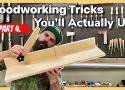
- zero clearance miter saw fence and holding stick
- grain direction - bark side - outside of the rings, toward the tip of the cathedral
- sacrificial fence clamps!
Four Workbench Building Mistakes (that we all make).

Avoid these common mistakes and make your first workbench last for years.
0:23 Overview/breakout of main issues
2:29 Problem 1: Joinery
8:56 Problem 2: Work holding
11:57 Problem 3: Sizing
It doesn't need to be too wide (30" is almost too wide), but it can be long.
14:20 Problem 4: Adaptability