Daily Shaarli
In much the same way that David Allen’s Getting Things Done method of productivity can be boiled down to five simple actions — Capture, Clarify, Organize, Reflect and Engage- the zettelkasten method can be summed up in a handful of activities. I’d call these Collect, Process, Cross-Reference and Use.
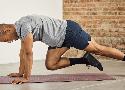
How to use this list: Clayton suggests doing each exercise in the lower abs workout below for 30 to 45 seconds before every run. “This will fire up your muscles so they’re active when you need them most,” Clayton says. Clayton even demonstrates them herself, so you can nail the perfect form. You will need a mat and a set of sliders. Two hand towels or paper plates will work. too.
1 Downward Dog Split to Elbow Knee Hold. ...
2 Side Plank With Reach-Through. ...
3 Slider Plank to Pike. ...
4 Slider Bear Plank. ...
5 Hollow Hold to V-Sit. ...
6 Straight Leg Pulse Up. ...
7 Diagonal Mountain Climber.
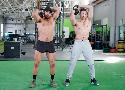
Jump Squat To Halo
Step 1. Place a kettlebell on the floor and stand behind it with feet shoulder-width apart. Twist your feet into the ground so that they’re turned a few degrees outward, and you feel your glutes tighten up. Maintaining a tall, long spine from your head to your pelvis, squat down, driving your knees outward as you descend (they should stay in line with your first two toes) until you can grasp the kettlebell handle.
Step 2. Holding the kettlebell handle overhand with both hands, draw your shoulders back and downward (think “proud chest”). Now jump up as high as you can. Land with soft knees, and then stand up, cleaning the dumbbell as you rise (flip it over in your hands so that the bottom is up).
Step 3. Raise the weight over and behind your right shoulder. Keep your elbows as close together as you can—your left forearm should brush over the top of your head as you raise the kettlebell. Continue moving the weight around the back of your head until it’s in front of you again (a halo). Keep your core braced to prevent any bending or twisting while you do the halo. Lower the weight to the floor, and re-set for the next jump squat. After you jump, perform the halo in the opposite direction.

For the first, grab the handles, jump your feet back, perform a push-up, and jump your feet back up next to the bells, feet wider than shoulder-width, torso almost parallel to the ground. Now row the bells to your ribcage, lower them back down to the floor, and hit the third move by cleaning the kettlebells to a rack position in front of your shoulders. To finish things off, perform a thruster, a squat to an overhead press. Lower the bells back down between your feet—and do it all again.
To add some practical testing and actionable advice to this theoretical musing, I offer this morning mobility check-in. In this video, I describe and demonstrate three quick movement sequences that you can do in a few short minutes any time of day and/or fresh out of bed
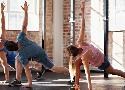
If a good stretch or warming up aren't part of your workout routine, you're missing out on some serious benefits for your mobility. Dr. Aaron Horschig, DPT, of Squat University, shares the one stretch that he believes you should be doing to maximize both your upper and lower body mobility.

1️⃣Carries
2️⃣Rows
3️⃣Y-Raises
4️⃣T-Raises
5️⃣Scapular Push-Ups
6️⃣Around The World’s

Hair space
- Code point: U+200A
- HTML/XML entity (decimal):
- HTML/XML entity (named): &#hairsp;
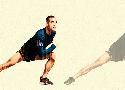
- Ankle Mobility
- Couch Stretch
- Hamstring Stretch
- Adductor Mobility
- Windmill
- Figure-Four Stretch
- Thoracic Opener
- Downward Dog To Lunge Rotation

What you'll need: One 12-kilogram kettlebell or a 20- to 25-pound dumbbell
Hollow-Body Chest Press
Half-Kneeling Press-to-Stand
Single-Leg Deadlift Row
Clean to Goblet Squat
Lateral Lunge to Balance
Single-Arm Kettlebell Push-Up

Atkins suggests doing 8 to 10 full circles every morning (or before your workout) with each arm to improve your shoulder mobility.
But if you find yourself unable to work through the full range of motion, you're not out of luck. "If you find this exercise challenging, try decreasing the beginning angle (when the arm is overhead, bicep near the ear) by taking the arm a little bit further away from the head," Atkins suggests. "You can also do this exercise standing next to a wall (ball side to the wall), and as your mobility improves, eventually relocate to the ground."
GST Insider Ep 31 Prone weighted arm circle
https://www.youtube.com/watch?v=0cDJsaLMlDE

Step 4: Add Water to the Pan
On the other side of the pan pour in enough water so that it pools, but does not touch the steak. Usually about a 1/4 cup of water works, as long as you're not adding so much that the liquid begins to pool under the steak. That will result in soggy steak, which is something no one likes.
Step 5: Now Steam that Sucker
Put a lid on the pan and turn the heat on to medium.
What should happen, if you read that part I bolded earlier, is that the water will heat, and steam will begin to fill the pan.

f you’ve never tried it, Derby Pie is a fabulous chocolate chip and walnut pie. There seems to be a widespread fallacy on the Internet that Derby Pie has pecans, but traditional Derby Pie has walnuts. If you don’t like walnuts, pecans are obviously a common substitution in recipes. Whichever nut you choose, this is a seriously yummy pie!
Sadly, my recipe is not for the original, one-of-a-kind Derby-Pie® because that recipe is top secret at Kern’s Kitchen, the developer of the pie over 50 years ago.