
JavaScript Frameworks Considered Harmful – Bob Myers – Medium

The dirty little secret about JS frameworks, not just Ember, is their abysmal performance on mobile devices. First, we have to download the huge runtime on a slow connection. Then, we have massive amounts of framework code running on a device which has a slower processor to start with, but may also have an inferior JS engine. The result can be latencies in seconds or even tens of seconds merely to display a page. There is no simple solution to this problem.
Free Frontend - CSS Menus

Hand-picked HTML and CSS code examples, tutorials and articles
A Stoic Response to Anger
Your instinct may be to yell and get angry. It’s natural. But just because it’s “natural” doesn’t mean it’s a good idea.
“how much more harmful are the consequences of anger…than the circumstances that aroused them in us.”
Getting Started With CSS Layout
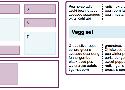
Whether you’re fairly new to CSS or an experienced developer from elsewhere in the stack who wants to make sure your understanding of layout today is up to date, this guide covers everything you need to know about CSS Layout today.
How the Bootstrap 4 Grid Works
The Rules of the Grid:
Columns must be the immediate child of a Row.
Rows are only used to contain Columns, nothing else.
Rows should be placed inside a Container.When should a primary key be declared non-clustered?

Say that I have a table of People, and these people have a Country column and a unique Primary Key. It's a demographics table, so these are the only things I care about; what Country and how many unique people are tied to that country.
I am thus only ever likely to SELECT WHERE or ORDER BY the Country column; a clustered index on the Primary Key doesn't do me any good, I'm not accessing this data by PK, I'm accessing it by this other column. Since I can only have one clustered index on a table, declaring my PK as Clustered would prevent me from using a Clustered Index on Country.
What Happens When You Create A Flexbox Flex Container? — Smashing Magazine
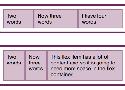
In a short series of articles, I’m going to spend some time in detailed unpacking of Flexbox — in the same way I have done in the past with grid. We’ll have a look at the things Flexbox was designed for, what it really does well, and why we might not choose it as a layout method. In this article, we will take a detailed look at what actually happens when you add display: flex to your stylesheet.
The Responsive Website Font Size Guidelines (Updated for 2018) – Learn UI Design
Use a text input font size of at least 16px. If your text inputs have a smaller font size than that, iOS browsers will zoom in on the left side of the text input, often obscuring the right side and forcing the user to manually zoom out after using the text box.
When picking a base size for a desktop website or web app, you can break down most designs into one of two types:
Text-heavy pages. Articles, blogs, news, etc. These are pages where the primary purpose the user has on the page is to read. There is very little in terms of interaction – perhaps just clicking a few links.
Interaction-heavy pages. Apps that involve more hovering, clicking, searching for an item in a list or table, editing, typing, etc. There may be plenty of text on the page, but it’s not stuff you read straight through like a book.
Perl Advent Calendar 2017 - Mojolicious on the Command Line
Mojolicious provides a utility class, ojo, that allows us to leverage the power of Mojolicious from the command line:
perl -Mojo -E 'say g("http://goo.gl/EsGk3b")->text'The -M flag tells perl to load the following module, so -Mojo, despite looking like a super secret Mojo flag to perl actually is a cheeky way of saying use ojo.
ojo provides a whole host of single letter functions that are shortcuts to Mojolicious utilities, allowing you to quickly do things like fetching urls, reading and writing files, encoding and decoding json, manipulating data structures and a whole host more.

Everything You Need to Know About the Iliopsoas | Breaking Muscle

Iliopsoas weakness may result in a “sway back” posture or “flat back” posture.
Hanging Leg Lifts (Knee to Elbows)
Hang from a pull up bar. Lift both knees in towards the chest. It’s important to reach the knees to the chest area, or you can aim for your elbows like the knee to elbow movement.
Eliminate Procrastination By Asking Two Incredibly Simple Questions

When I catch myself procrastinating, I take it as a positive opportunity to reassess what I’m doing.
1-What do I need to do? (Specific and in detail.)
2-Why do I need to do it? (Again, specific and in detail.)
How to use Chrome DevTools like a Pro | The JotForm Blog

- DOM Search by CSS Selectors
- Material and Page Color Palettes
- Multiple Cursor
- Get the current element with “$0”
- View Event Listeners
- Media Query
- Copy Response
- Run Predefined Snippets
Curious About Color Mixing? Here Are the Basics You Need to Know

- Add a dark pigment to light colors.
- When darkening a color, avoid using black. To create a more nuanced color, try adding ultramarine blue or burnt umber instead.
- Skip using black altogether. Mix them in equal parts to make a rich, beautiful black. When mixed with white, it makes a great gray.
- To make a color look “cool,” add blue. To make it appear warmer, try incorporating yellows or reds.
- Play around with color mixing without using any paint—thanks to this website. Try Colors
- Mix your colors a little lighter than you want them to dry.
How to Create a Piggy-Bank Illustration in Adobe Illustrator

Understanding CSS Layout And The Block Formatting Context
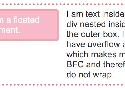
How a Block Formatting Context (BFC) behaves is easiest to understand with a simple float example. In the below example I have a box that contains an image that has been floated left and some text. If we have a good amount of text it wraps around the floated image and the border then runs around the whole lot.
There are two ways in which we ordinarily fix this layout problem. One would be to use a clearfix hack, which has the effect of inserting an element below the text and image and setting it to clear both. The other method is to use the overflow property, with a value other than the default of visible.
.outer {
overflow: auto;
}
Machine learning in Perl: Kyuubi goes to a (Model)Zoo during The Starry Night. | Sergey Kolychev [blogs.perl.org]
Hello all, this is a fourth blog post in the Machine learning in Perl series, focusing on the AI::MXNet, a Perl interface to Apache MXNet, a modern and powerful machine learning library.