Daily Shaarli

The inputmode attribute that helps browsers on devices with on-screen keyboards decide which keyboard to display (e.g. telephone, numeric, email, search) has been around for long, but it wasn’t until a few months ago that Safari for iOS and Chrome for Android adopted it. Time to get familiar with the concept. Christian Oliff’s article “Everything You Wanted To Know About inputmode” is a great primer to dive deeper into the attribute and how to make use of it. (cm)

With browser support of ES6 having reached more than 96%, it might be a good idea to move away from jQuery to accomplish basic tasks like fetching data, selecting elements, styling and animating them, as Tobias Ahlin argues.
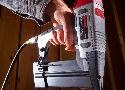
18-gauge brad nailer
If you plan to buy only one trim nailer, this is the size to get. I use mine more than all my others combined. It’s perfect for standard trim, furniture making and odd jobs around the shop. Models that shoot brads up to 1-1/4- in. are common, but I strongly recommend spending a few bucks more for a gun that can handle brads up to 2 in. long. Name-brand 2-in. guns start under $100.
Use nails before screws
I always found it difficult to keep parts aligned when screwing cabinets together. Then I discovered that a couple of shots with my finish nailer or brad nailer will keep the parts aligned while I drill pilot holes and drive screws for strong joints.
Invisible nail holes with a pinner
Pins are tiny and headless, so they’re hard to see even before you fill them. Afterward, nobody but you will know they’re there.
Nail before you clamp
With a coat of slippery glue, parts will slide out of alignment while you’re desperately trying to clamp them. My solution is to tack the parts together with a couple of nails. That keeps the parts aligned while I apply serious pressure with clamps.
No stud? No problem
Studs aren’t always located where we need them. When I need to nail trim where there’s no stud, I dab some construction adhesive on the back of the trim and then drive nails into the drywall at 45-degree angles. That holds the trim tight against the wall while the adhesive cures. This “trap nailing” technique works fine with brad nailers and even better with finish nailers.