Daily Shaarli
Essentials E-Commerce icon pack for free. Designed by H2D2. Thanks for downloading!
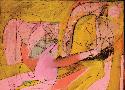
Representing nearly every type of work de Kooning made, in both technique and subject matter, this retrospective includes paintings, sculptures, drawings, and prints.

Optimal value-to-bluff ratios are easiest to calculate on the river because our bluffs should have 0% equity when called.
This is in contrast to preflop, the flop, and the turn, where our bluffs will almost always have some equity when called. So, let’s work backward and start by evaluating a river example.
Suppose the pot is $100 on the river and we want to bet 75% of the pot with a perfectly balanced and polarized range.
This means that our opponent will risk $75 to win a $250 pot ($100 pot + our $75 bet + his $75 call), which means that he needs to win 30% of the time ($75 / $250 = 0.30) with his bluff-catchers in order to break even on his call.
You do not demand the bud blossoms at a certain hour. You plant a seed deeply, you water it and give it light, and then you let it do what it was created to do. You are the exact same way. If you show up each day and do the work, the desired results will come on their own, in due time.
Trying too hard makes you instantly ineffective.
When someone tries too hard to get you to like them, you are more disinclined to give them a chance. When someone tries too hard to make you think they’re attractive, you usually don’t. When someone tries too hard to convince people that you are intelligent, they start to seem unintelligent. When you try too hard to sell your business, it tends to push people away. When you try too hard to seem cool, you do not seem cool.
In every single thing that brings us success in life, there is an element of effortlessness at work.

Lewis’s expansive engagement with drawing involves material, language and the properties of abstraction. He uses poetry and text to raise and explore social and political issues such as race and power. Graphite powder, his medium of choice, provides endless possibilities, but it’s “an inherently unruly medium, a substance that threatens to wander,” and therefore is potentially an environmental hazard.
Avoiding a test count seems to be the trend in Perl modules these days. After all, automated test libraries in other languages don’t have anything similar, and they seem to get by fine. If the test fails in the middle, that can be detected by a non-zero exit code. It’s always felt like annoying bookkeeping, so why bother?
For simple tests like the above, I think that’s fine. Failing with a non-zero exit code has worked reliably for me in the past.
However, there’s one place where I think TAP had the right idea way back in 1988: event driven or otherwise asynchronous code. Systems like this have been popping up in Perl over the years, but naturally, it’s Node.js that has built an entire ecosystem around the concept. Here’s one of my tests that uses a callback system:

Nobody wants their brand to look like it hasn’t been updated in years. You only get one chance to make a first impression … and most marketers and designers will do anything to make a good first impression. Especially if your competitors are all out there looking fresh and up-to-date.